
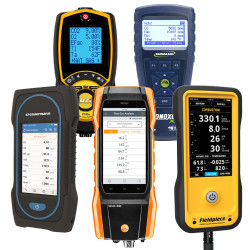
Combustion & Emissions Testing
Shop professional combustion and emissions testing tools designed for accurate HVAC/R system diagnostics. Find combustion analyzers, flue gas testers, probes, and accessories that help technicians verify appliance performance, efficiency, and safety.
-
 Residential and Light Commercial
-
 Commercial
-
 Industrial and Emissions
-
 Replacement Sensors and Spare Parts
-
 Understanding Combustion Analysis
What tools are included in a combustion testing setup?
For HVAC, building performance, and weatherization professionals, we recommend using a combustion analyzer, personal CO monitor, draft gauge, and smoke pencil to verify safe appliance operation. Even if you are not qualified to make repairs, you should at minimum identify potential issues and consult a licensed HVAC contractor trained in CO and combustion safety for corrective work.
- Combustion Analyzer: Measures flue gas composition, combustion efficiency, CO levels, stack temperature, and other safety-critical values
- Flue Gas Probes: Allows safe and accurate sampling inside exhaust vents and flue pipes
- Filters and Traps: Protects analyzer sensors from moisture, condensation, and particulate debris
- Personal CO Meter: Ensures technician safety before and during testing
- Draft Gauge: Verifies minimum draft requirements for vented appliances (often included with analyzers)
- Smoke Pencil: Identifies spillage at draft hoods and helps determine airflow direction in the combustion air zone (CAZ)
What is a combustion analyzer used for?
A combustion analyzer measures flue gas composition and evaluates HVAC and fuel-burning appliance performance. It helps technicians verify proper combustion, efficiency, and safety by measuring oxygen, carbon monoxide, carbon dioxide, stack temperature, and other critical parameters.
Why is combustion testing important for HVAC systems?
Proper combustion testing ensures appliances are burning fuel safely and efficiently. It allows technicians to detect inefficient combustion, elevated CO levels, airflow issues, and venting problems before they become safety hazards.
How is flue gas tested?
Testing is performed using a combustion analyzer and flue gas probe inserted into the exhaust stream of a fuel-burning appliance. The analyzer measures important values such as oxygen, carbon monoxide, carbon dioxide, stack temperature, and combustion efficiency.
What are hole plugs used for in combustion testing?
Hole plugs seal access points in exhaust vents or flue pipes to prevent gas leaks, protect probes, and ensure accurate flue gas measurements. Always use heat-resistant plugs rated for the type of flue material and temperatures you are working with.
- Countersunk Plugs: Typically used with PVC or plastic venting. Beveled edges create a tight seal without damaging softer materials.
- Metal Snap-In Plugs: Designed for sheet metal flues and ducts. Snap securely into pre-drilled holes and withstand higher temperatures and metal edges.
When should combustion or emissions testing be performed?
Testing should be performed during system startup, routine maintenance, equipment commissioning, and whenever fuel-burning equipment is serviced or adjusted. Regular testing ensures safe operation over time.
Are combustion analyzers required for code compliance?
Many local codes, safety standards, and manufacturer guidelines require combustion analysis when servicing or commissioning fuel-burning equipment. Using a combustion analyzer helps document compliance and verify safe operating conditions.
Who should use combustion and emissions testing tools?
These tools are essential for HVAC/R technicians, service professionals, inspectors, and maintenance personnel working on gas-, oil-, or propane-fired equipment in residential, commercial, and industrial settings.