



CO Safety: What Every Technician Must Check Before Heating Season
As heating season begins, furnaces and other fuel-burning equipment return to regular use after months of sitting idle. For HVAC technicians, preseason service is an important opportunity to identify combustion, venting, and carbon monoxide (CO) concerns before the system is relied on throughout the winter.
Carbon monoxide is a colorless, odorless gas produced by incomplete combustion of carbon-containing fuels. Gas- and oil-burning furnaces produce CO, but in a properly operating system, combustion products are safely vented outside. Problems such as improper installation, poor maintenance, or blocked or defective venting can create a CO hazard.
Because CO cannot be seen or smelled, testing is essential.
Start With the Heating System and Venting
The CDC recommends that heating systems and other fuel-burning appliances be serviced annually by a qualified technician. The CPSC similarly recommends yearly professional inspection of furnaces, boilers, chimneys, flues, and vents.
During a heating-season service call, technicians should inspect the appliance and venting system for conditions that could interfere with proper combustion or exhaust. Venting deserves particular attention because blocked or defective vents can prevent combustion products from exiting the building safely.
For systems with outdoor exhaust terminations, technicians can also remind customers that vents should remain clear of snow and other obstructions throughout the winter.
CO Alarms Are Not Combustion Test Instruments
A working household CO alarm is an important layer of protection, but it serves a different purpose from the instruments technicians use to evaluate heating equipment.
An installed household CO alarm responds based on both the concentration of CO and the duration of exposure, according to the alarm’s design. A silent household alarm does not mean the air is CO-free because household CO alarms are not designed for low-level monitoring. The EPA emphasizes that CO alarms are a backup, not a substitute for proper installation, use, and maintenance of fuel-burning equipment. A portable personal CO monitor serves another purpose. Worn by the technician, it continuously monitors the surrounding air while the technician moves through the home and works around combustion equipment. Contractors who want to equip multiple technicians with personal CO monitors can contact TruTech Tools for bulk pricing. Call 888-224-3437 or email support@trutechtools.com for assistance.
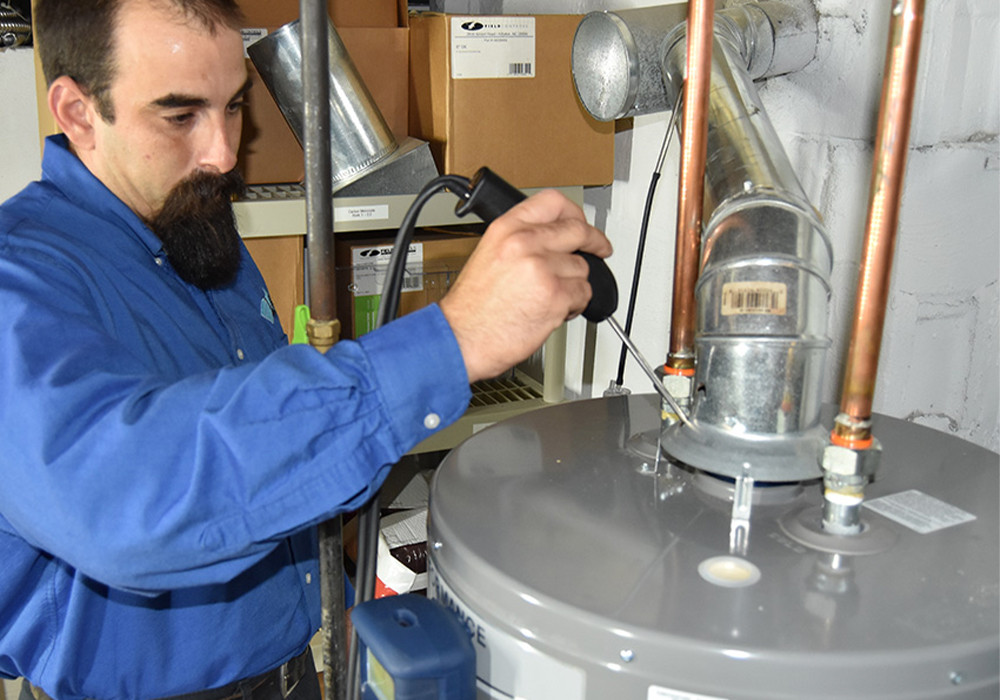
A combustion analyzer, meanwhile, samples the appliance's flue gas. These instruments typically directly measure flue-gas temperature, carbon monoxide, and oxygen. Depending on the analyzer, they may also calculate values such as carbon dioxide, air-free CO, excess air, and combustion efficiency. Some analyzers can also measure draft.
The difference between ambient CO monitoring and flue-gas testing is important. Do not assume that an analyzer sampling flue gas is also monitoring the air you are breathing. Use a separate personal CO monitor for continuous monitoring around the technician.
Test Combustion, Don't Judge It by Appearance
A flame that looks normal does not provide enough information to determine whether an appliance is operating safely. Combustion analysis provides measurements technicians can use to evaluate appliance operation and identify conditions that may require further investigation or adjustment. Those measurements must be interpreted for the specific equipment being tested and in accordance with manufacturer instructions and applicable standards.
Sampling location also matters because combustion readings can vary depending on where measurements are taken. CO readings should be evaluated based on the specific appliance, measurement location, whether the reading is air-free or as measured, manufacturer-recommended levels, and applicable standards rather than against a single universal limit.
A professional combustion testing setup may include a combustion analyzer and flue-gas probe, personal CO monitor, draft measurement tools, and other instruments such as a combustible-gas detector.
Help Customers Prepare for CO Safety This Winter
A heating-season visit is also a good time to reinforce a few basic safety practices. The CPSC recommends CO alarms on every level of the home and outside sleeping areas, with alarms tested monthly. Customers should also understand that portable generators must be operated outdoors at least 20 feet from the home, with exhaust directed away from buildings and their opening.
Technicians can also make sure customers know how to respond to a CO alarm. If an alarm sounds, occupants should leave the building, call 911 from outside, and wait for emergency personnel to approve re-entry rather than trying to locate the source themselves.
Symptoms of CO poisoning can include headache, dizziness, weakness, nausea or vomiting, chest pain, and confusion. Exposure can become serious or fatal, making prevention and early warning especially important.
Heating-season service isn't just about making sure the furnace produces heat. Proper inspection, combustion testing, venting checks, ambient CO monitoring, and working household alarms all play different roles in reducing CO risk. With the right testing procedures and tools, technicians can identify potential problems before they become winter emergencies.
Build Your Combustion and CO Testing Skills
Technicians looking to expand their combustion and CO safety knowledge can take advantage of Combustion Performance & Carbon Monoxide Safety training from TruTech partner National Comfort Institute (NCI). The hands-on course covers combustion performance and CO safety testing and protocols.
Publicaciones recientes
-
CO Safety: What Every Technician Must Check Before Heating Season
As heating season begins, furnaces and other fuel-burning equipment return to regular use a …25de octubre 2026 -
Personal CO Monitors and Their Importance
Carbon monoxide (CO) is a byproduct of incomplete combustion that cannot be seen, smelled, …8de octubre 2026 -

Stop Feeding Google Bad Leads: Get Digital Advertising To Drive Revenue
A TruTech Tools exclusive article brought to you by: ClickToast Digital Advertising www.cli …13th Sep 2026