
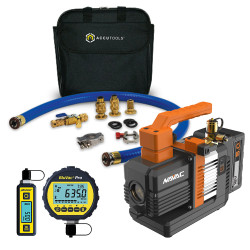
Vacuum & Recovery Products
Shop professional vacuum and recovery rigs designed to speed up HVAC/R service and improve evacuation accuracy. Find complete kits, vacuum pumps, hoses, micron gauges, and recovery tools built for faster pull-downs and reliable refrigerant handling.
-
 Vacuum Training
-
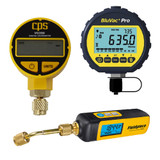 Vacuum Gauges \ Micron Gauges
-
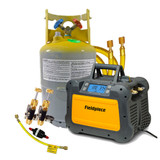 Recovery Kits
-
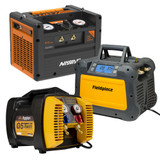 Recovery Machines
-
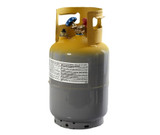 Recovery Tanks
-
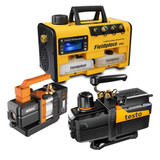 Vacuum Pumps
-
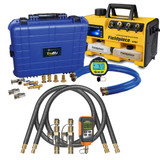 Evacuation and Vacuum Kits
-
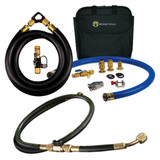 Vacuum Hoses and Manifolds
-
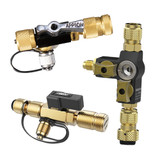 Vacuum Rated Core Tools
-
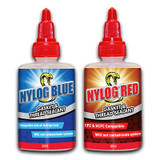 Vacuum Sealant
-
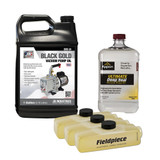 Vacuum Pump Oil
-
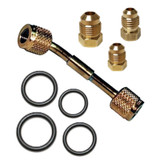 Parts and Accessories
What is a vacuum rig used for in HVAC?
A vacuum rig is used to evacuate air, moisture, and non-condensable gases from HVAC and refrigeration systems before charging refrigerant. Proper evacuation helps prevent system damage, improves efficiency, and ensures the system operates as designed.
What tools are included in a typical HVAC vacuum rig?
A standard HVAC vacuum rig is made up of components designed to improve evacuation speed and measurement accuracy, including:
- Vacuum Pump: Pulls air and moisture out of the system efficiently
- Large-Diameter Vacuum Hoses: Improves evacuation speed and reduces restrictions
- Micron Gauge: Measures deep vacuum levels accurately
- Core Removal Tools: Allows removal of Schrader cores to maximize airflow
- Vacuum-Rated Fittings and Adapters: Ensures secure connections for leak-free evacuation
Why are large-diameter vacuum hoses better than standard hoses?
Large-diameter vacuum hoses allow significantly higher airflow compared to traditional 1/4" hoses, reducing restrictions and evacuation time.
- Faster pull-down to deep vacuum levels
- Improved moisture removal
- Reduced restriction from Schrader cores
- More stable micron readings
What micron level should I pull a vacuum to?
Most HVAC manufacturers recommend evacuating systems to 500 microns or lower and confirming the vacuum holds during a decay test. This verifies that moisture and non-condensables have been removed from the system.
Do I need a micron gauge if my manifold already shows vacuum?
Yes. Manifold gauges are not designed to measure deep vacuum accurately.
- Manifolds show pressure, not micron-level vacuum
- A micron gauge provides precise evacuation verification
- Accurate readings help identify leaks and moisture
What is a refrigerant recovery rig used for?
A refrigerant recovery rig is used to safely remove refrigerant from HVAC and refrigeration systems during service, repair, retrofit, or system replacement. Recovering refrigerant prevents venting into the atmosphere, protects system components, and allows refrigerant to be reused or properly recycled. Using a properly configured recovery rig helps technicians work faster while maintaining control over pressure, flow, and refrigerant type throughout the recovery process.
Can one rig be used for both vacuum and recovery?
Some components can overlap, but vacuum and recovery processes require different setups for best results.
- Vacuum rigs focus on airflow and moisture removal
- Recovery rigs focus on refrigerant transfer speed
- Separate rigs help prevent cross-contamination
Are vacuum and recovery rigs worth the investment?
For HVAC/R professionals, vacuum and recovery rigs significantly reduce service time and improve job consistency.
- Shorter evacuation and recovery times
- More accurate measurements
- Fewer callbacks due to improper evacuation
- Better overall system performance