



Home Energy Rebates Are Reaching Your Customers
Home Energy Rebates are getting attention again, and you may be hearing about them on service calls. Homeowners are asking whether a new heat pump qualifies, whether sealing up a leaky house counts, whether this is finally the year to replace an aging system.
Here is the practical read on what this means for the work you already do.
This isn't a brand-new program
The funding for these rebates comes from the Inflation Reduction Act, and the earliest state programs opened back in 2024. What is new is the momentum. More states are moving toward launch this year, each on their own schedule. Availability varies from state to state. Some have programs up and running today. Others are still preparing to open.
That means the opportunity shows up differently depending on where you work, so it is worth knowing where your state stands.
Homeowners get the rebates. You get the customers.
The rebates go to homeowners, not to contractors. But more homeowners now have a reason to move forward on efficiency work they might have put off. A rebate can turn a "maybe next year" into a "let's schedule it." Much of that demand can be met with services you already offer.
The work is your bread and butter
Here is the good news. The tools that support rebate-related work are the same core HVAC and home performance tools many of you already own and use every day.
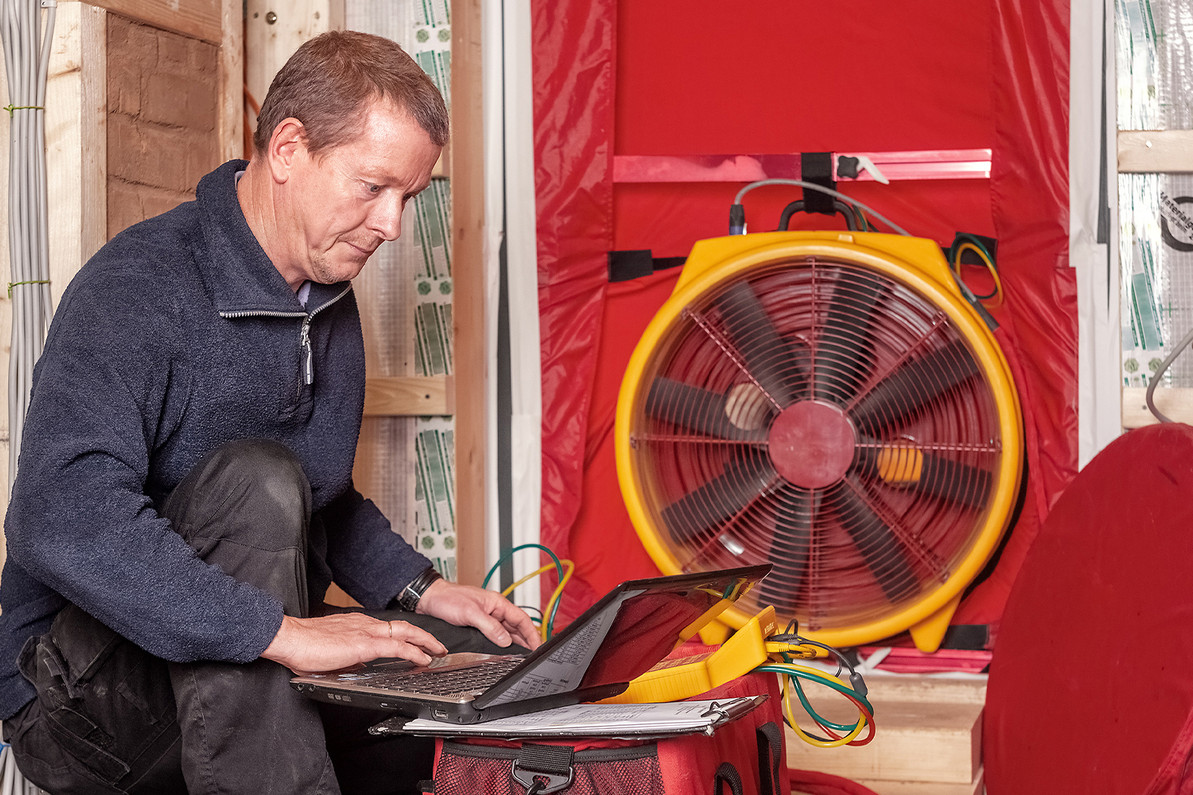
These programs lean heavily on whole-home performance and envelope work, air sealing and insulation included, which is exactly what a blower door and a duct tester are built to measure. If you are commissioning systems, testing ducts, and checking airflow, you are already equipped for the kind of work these programs tend to reward. You do not need to reinvent your business to take part.
Rebate work comes with documentation requirements
For certain projects, contractors may need to document performance, verify results, and provide testing data to support a homeowner's rebate. Put simply, it's not enough to say the work is done. You also need to show the results.
That raises the value of clean, trustworthy measurements. Static pressure readings, airflow data, before-and-after performance, a thermal image that confirms the fix. Good diagnostics have always separated the careful contractor from the rest. Now they can also help your customers get rebates.
Timing creates regional opportunities
Because these programs are federally funded but run by the states, demand is arriving at different times in different places. Some states already have active programs and homeowners spending. Others are weeks or months from launch.
Take Georgia. A pilot that opened in late 2024 had served close to 1,600 households through more than 115 contractors by early 2026.
The takeaway is simple. If your state is live, the customers are already out there. If it is not yet, this is a good time to review your diagnostic and verification workflow, so you are ready when it launches. Just keep in mind that availability, rules, and timing vary from state to state, so it is worth confirming where your own state stands before you lean on it.
Stay rebate ready
Keep diagnostics and verification equipment on hand, the blower doors, duct testers, thermal imagers, and measurement tools that let you do the work well and back it up with data.
If you are missing a tool you will need before your state's program launches, we are glad to help you sort out what you need.
Publicaciones recientes
-
Stop Feeding Google Bad Leads: Get Digital Advertising To Drive Revenue
A TruTech Tools exclusive article brought to you by: ClickToast Digital Advertising www.cli …13th Sep 2026 -

'Keep HVAC Local' Hat Sales Benefit the GRIT Foundation
WorkHero has launched the Keep HVAC Local campaign to raise money for the GRIT Foundation a …2nd Sep 2026 -
5 Essential HVAC Tools Technicians Reach for Every Day
Every technician has favorite tools, but some get used on nearly every service call. I don’t …16th Aug 2026